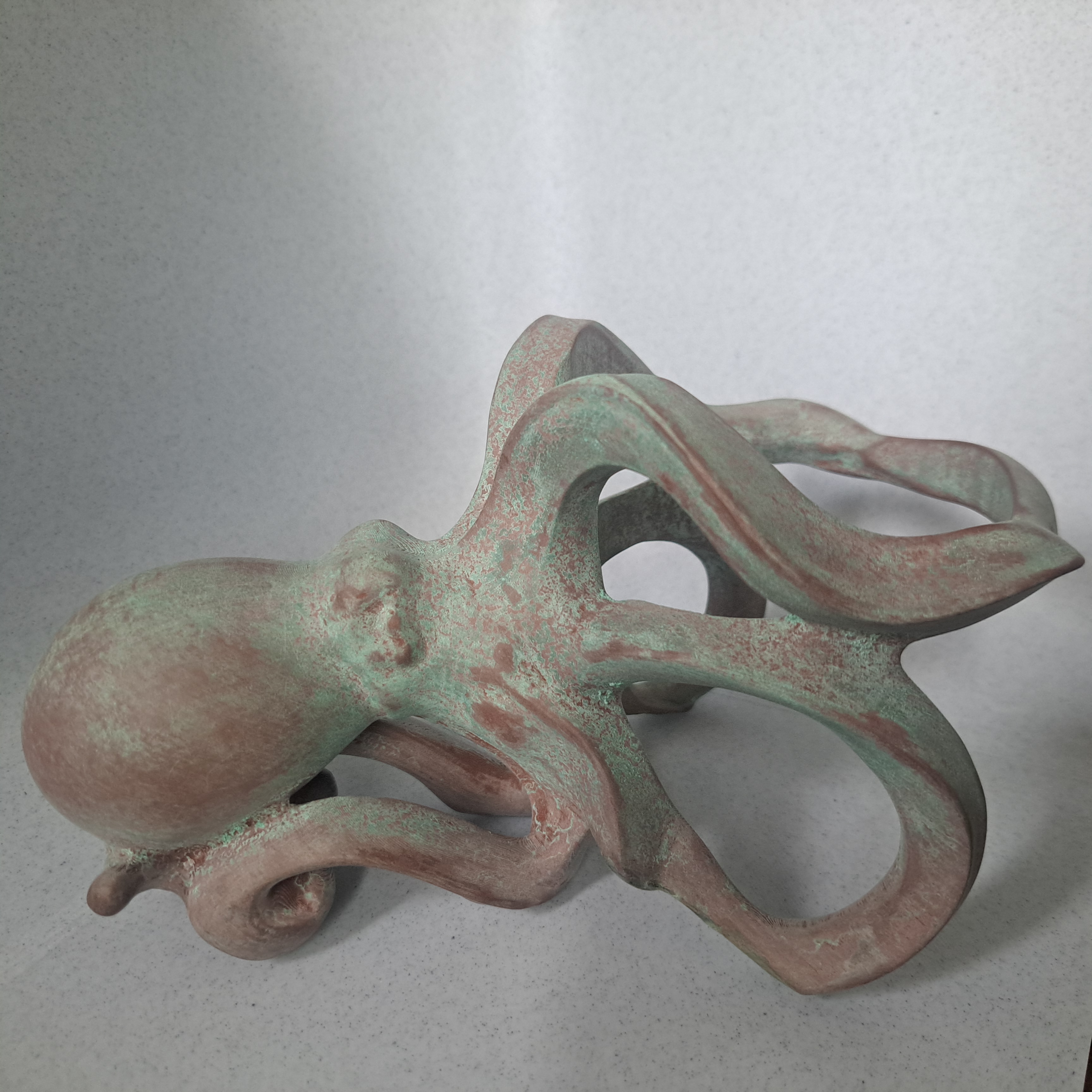
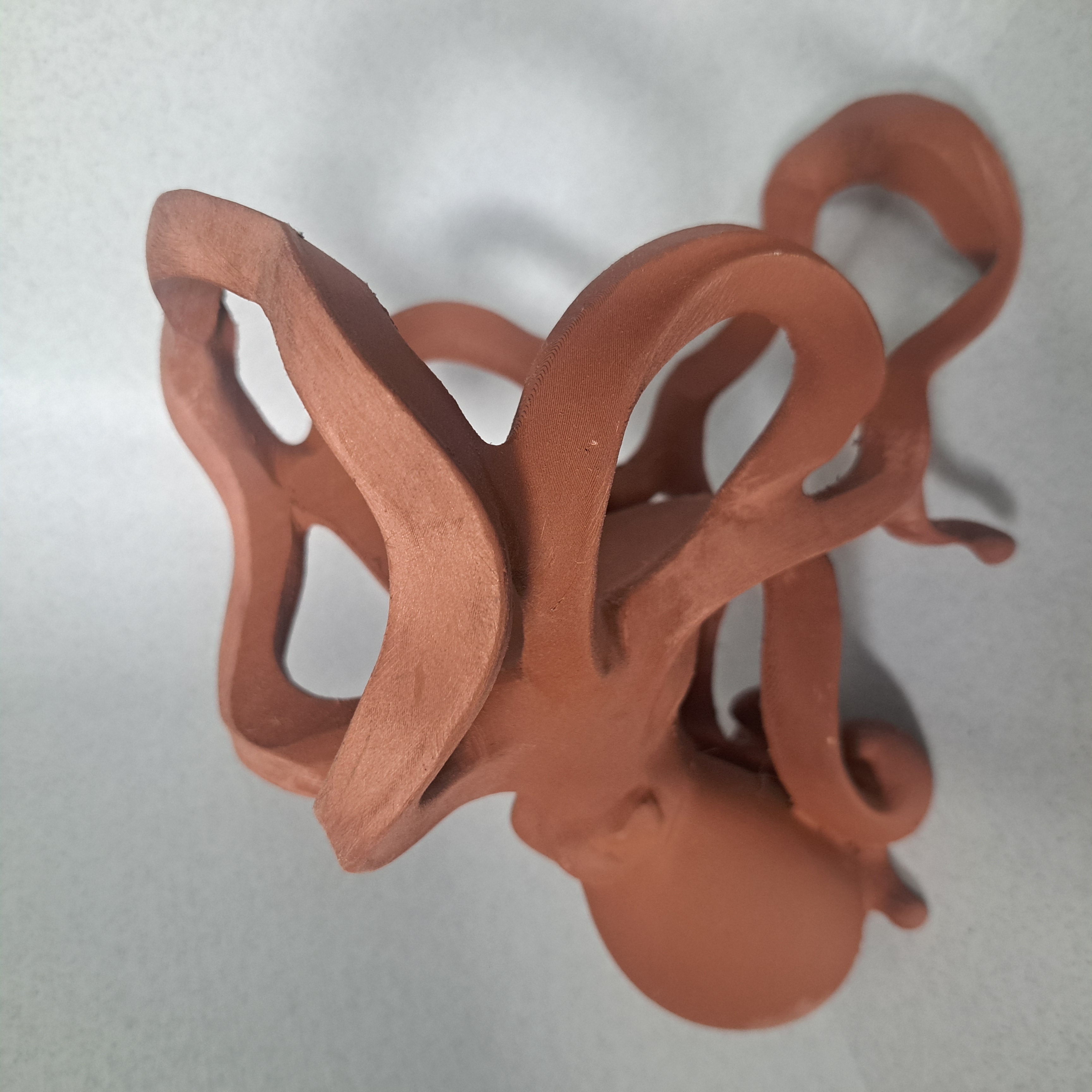
A sculptural wine bottle holder concept developed for the Harpswell Collective — combining coastal object design, functional display, and copper-composite finishing developed through extensive hand work and patina study.
12–15 hoursHand processing per piece before patina
40% CopperCopper-composite filament — sculptural print material
Patina StudySurface direction under active evaluation
The Object
Functional Sculpture
The octopus holder is being developed as a functional sculptural object: part tabletop display, part coastal artifact. The design should support a standard wine bottle while preserving the feeling of a hand-finished nautical object rather than a novelty holder.
Each piece is printed in 40% copper-composite filament, then brought through roughly twelve to fifteen hours of support removal, sanding, surface refinement, and structural cleanup — all before any patina work begins. The studio labor is the object.
Patinated form — tentacle structure and holder geometry
Origin
Model Rights & Studio Context
At the request of the Harpswell Collective, this project adapts a dimensional model Matthew Skowron holds the rights to — translated into a functional wine bottle holder for their coastal community context.
All other Skowron Copper work remains one hundred percent original studio art. This adaptation is a specific collaboration project, not the general direction of the brand.
Project StatusIn development — functional testing and patina direction ongoing.
Studio Sequence
Before Patina
The object earns its surface. Patina is the last chapter — not the first.
Formed
The adapted model is prepared as a dimensional sculptural print — tentacle loops, bottle contact geometry, and base stability evaluated at scale.
Printed
Each holder is produced in 40% copper-composite filament as a sculptural print — material chosen for weight, warmth, and finishability.
Refined
Supports removed by hand. Tentacle scars cleaned. Surfaces sanded, repaired, and strengthened across twelve to fifteen hours of studio processing per piece.
Patina Tested
Only after the surface is fully prepared does patina work begin — testing verdigris depth, copper exposure, recess behavior, and whether the finish reads as aged coastal metal rather than applied color.
Surface Archive
Patina Studies
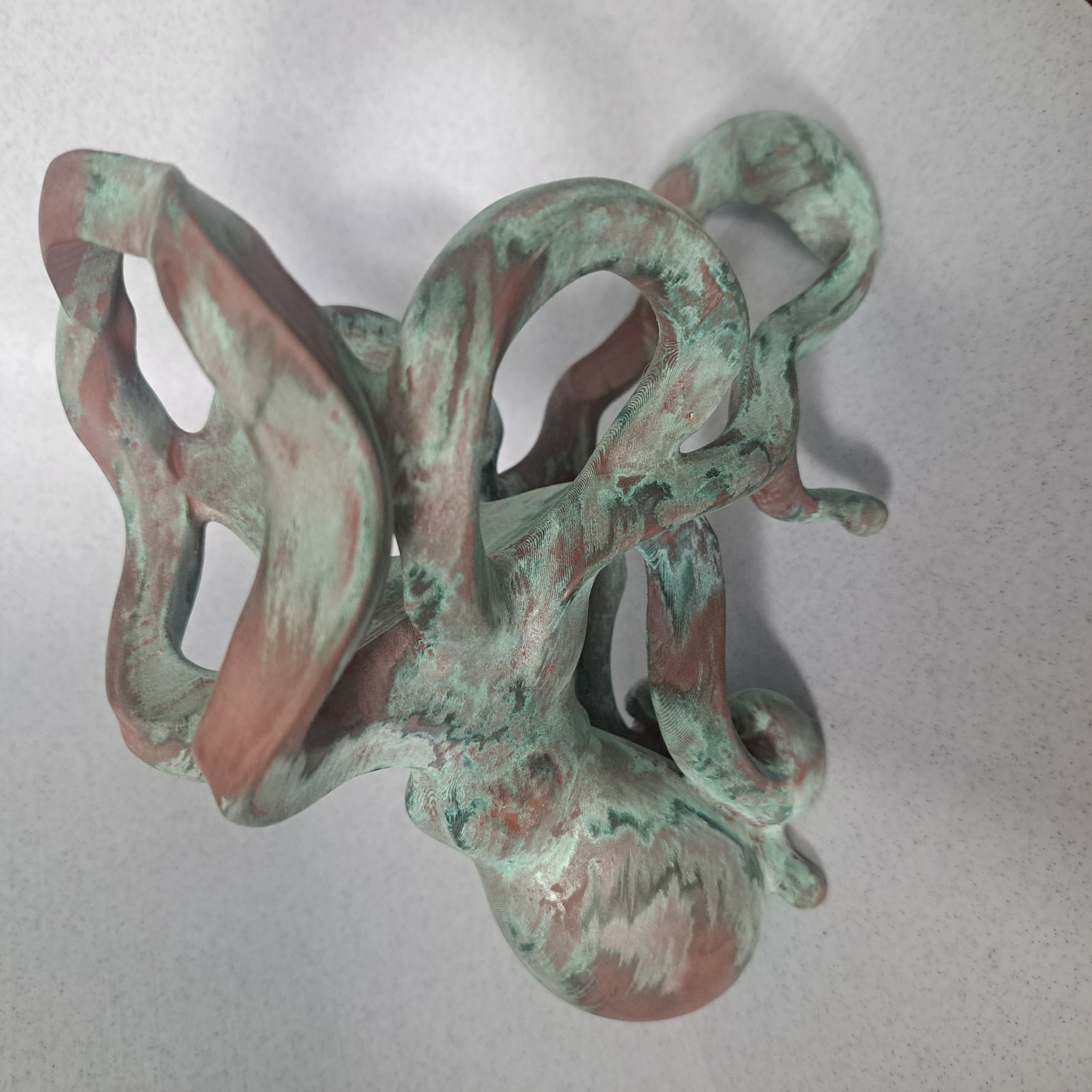
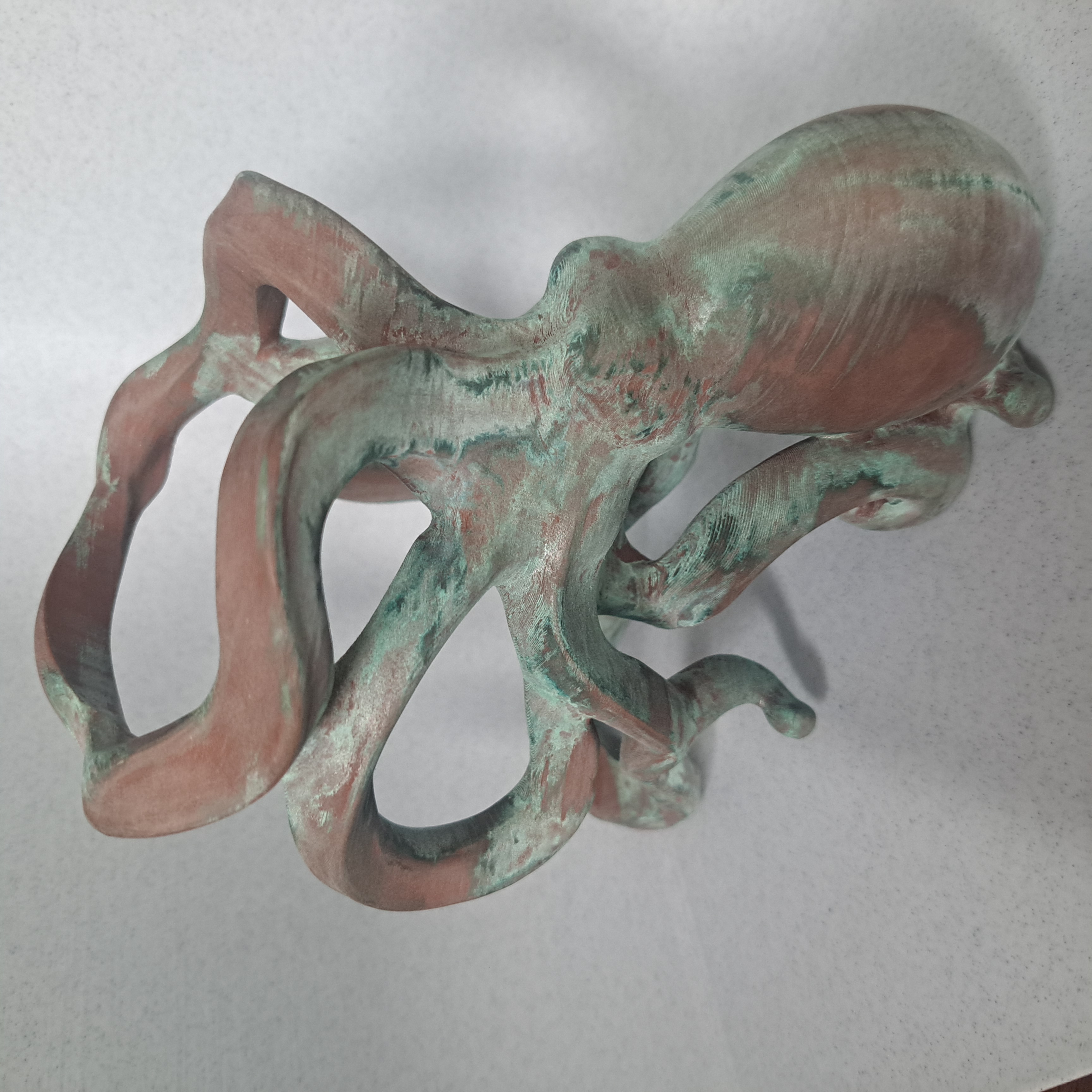
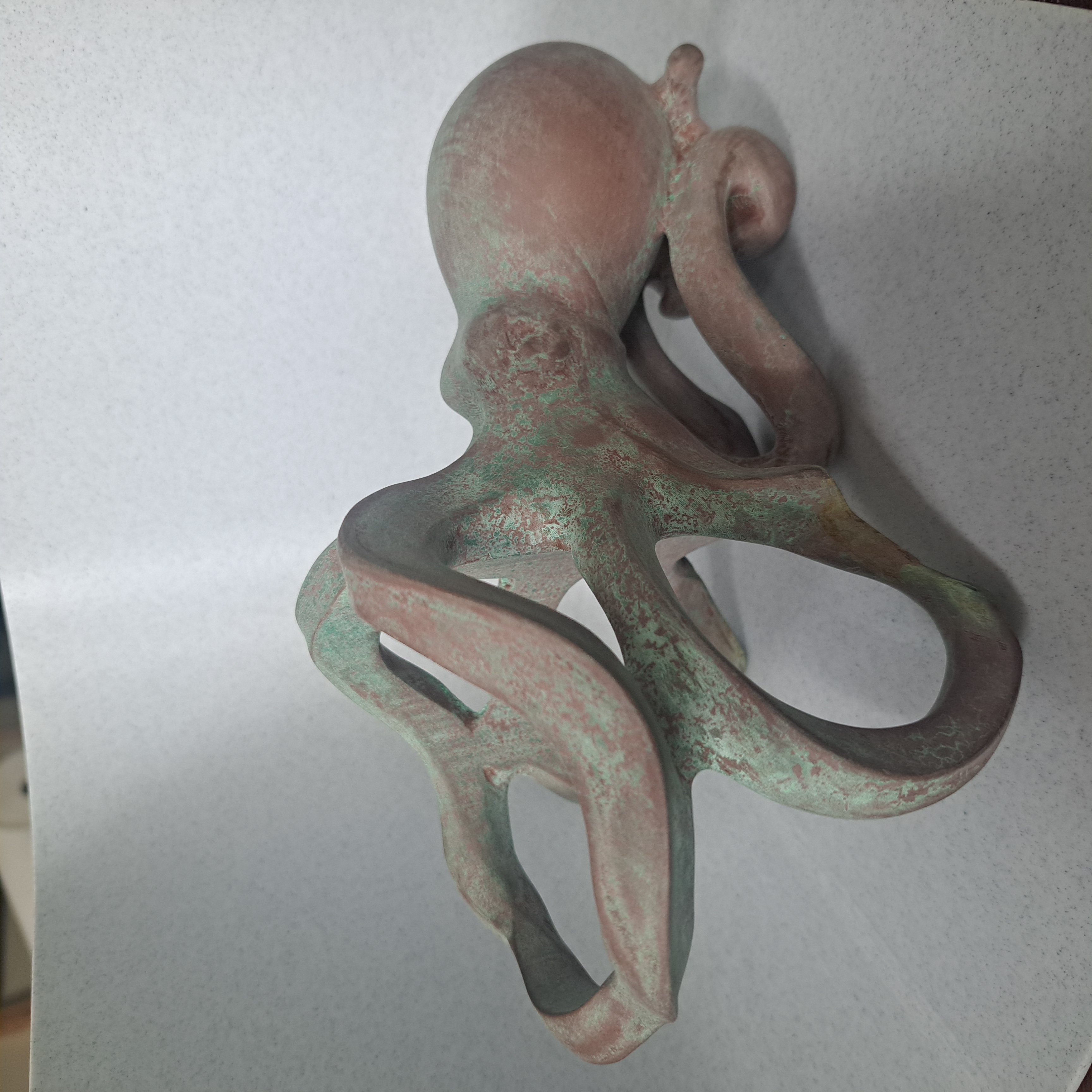
These are real patina tests on hand-finished copper-composite holders — not renderings. Each pass reveals how the material accepts oxidation, where green settles into recesses, where copper warmth stays visible, and whether the surface supports the premium coastal object the Harpswell Collective project requires.
Patina distribution — top view
Verdigris concentration study
Holder geometry under patina
Hand Work Begins
Raw Copper Surface
Pure copper exposed — the object as it appears at the very start of twelve to fifteen hours of hand processing, before patina.
This work moves between studios in Massachusetts and Maine. What you see here is the copper-composite print with its natural material exposed — support scars still present, surfaces not yet refined, patina not yet applied.
Day one — pure copper exposed, hand work aheadPresentation study — coastal object identity
Project Intent
A collaboration project for the Harpswell Collective: a wine bottle holder that reads as sculptural coastal object first, functional display second. The piece should hold presence on a table or shelf with or without a bottle in place.
Functional Requirements
Support a standard wine bottle securely
Keep the bottle visually elevated
Avoid fragile tentacle contact points
Maintain a stable base
Allow sanding and finishing access
Feel sculptural even without the bottle
Sculptural Direction
The form draws from nautical object language — tentacle gesture, weight distribution, and negative space — without tipping into novelty decor. Copper-composite finishing, patina development, and hand-refined surfaces will determine whether the piece earns a place beyond prototype.
Prototype Questions
How much tentacle detail is printable and finishable?
Where does the bottle actually rest?
Can the form stay elegant without becoming fragile?
What areas will become support-removal problems?
Does the finished piece read as premium coastal object rather than novelty decor?
Harpswell Collective
Developed as a project for the Harpswell Collective — a Midcoast Maine hub for local artists and makers. Additional prototype documentation will be added as the work progresses.